
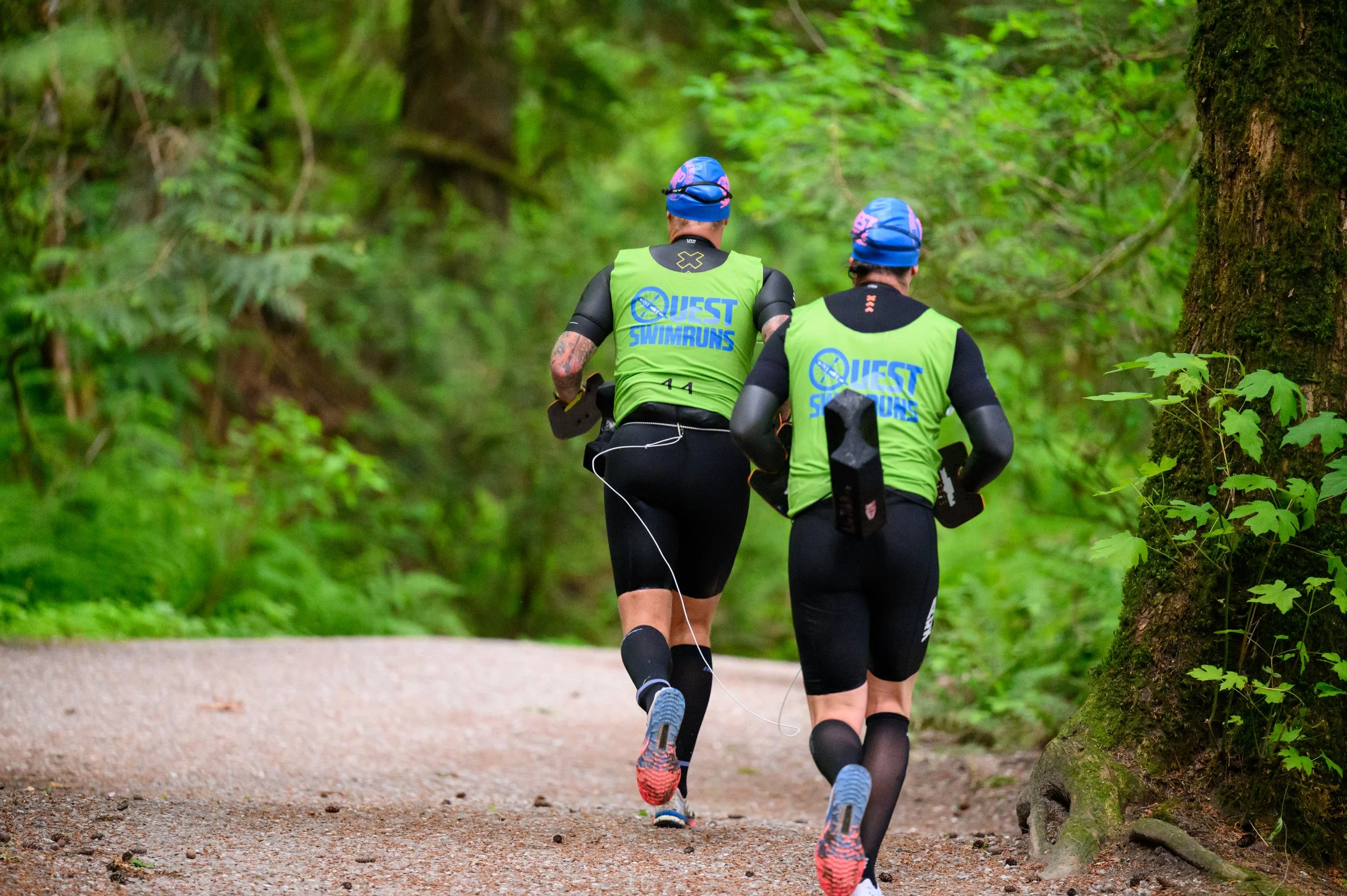
Swimrun Gear: A Complete Guide
Updated for 2026! It has been a bit since we have updated this guide and we have done a ton more testing and racing with different gear, so this guide got an upgrade!
Swimrun gear is a complex subject and everyone has different opinions of what you need and what you don’t. The goal of this guide is to layout the basics to have for someone get started with Swimrun. We’ll also give you a few options for each gear category based on gear we’ve tried to help get you started. For some categories of gear we have full “Gear Talk” episodes if you really want to dive in deep.
What do you wear to a Swimrun?
When you’re ready to try Swimrun you will need to use some gear to get started. The gear consist of a few main components, each gear category is broken down in greater detail later in the guide.
Swimrun Wetsuit
Swimrun Shoes
Swimrun Pull Buoy (Optional but highly recommended)
Swim Paddles (Optional but recommended depending on your overall swim fitness)
Swim Goggles
Shin/ Lower body floats (Optional)
Tether
Swimrun Undergarments
Socks
Mandatory Swimrun Race Gear
What type of wetsuit do you need for swimrun?
A swimrun wetsuit is a specialized wetsuit designed for both swimming and running, featuring front zippers for temperature regulation, short legs cut above the knee, and flexible materials on the lower half of the wetsuit for unrestricted movement. Unlike triathlon wetsuits that prioritize swim speed with back zippers, swimrun suits balance temp regulation, buoyancy with running mobility.
Swimrun wetsuits follow the "Goldilocks Rule." Some prioritize swimming performance with thicker neoprene and tighter fits, some favor running with ultra-flexible materials and minimal coverage, and some land in the middle. Wetsuits also vary in thickness for different water temperatures, from thin 2mm suits for warm water to 5mm+ cold-weather models.
When choosing a swimrun wetsuit, prioritize fit, durability, storage capacity (pockets), and cost. Higher-end suits use lighter, more flexible materials but may sacrifice durability for speed. Thicker cold-water suits keep you warm in 30+ minute swims but can overheat on long runs.
Key questions before buying:
Do I need more lower body flexibility for running? (Look for thinner leg panels or Running++ technology)
Do I get cold easily after long swims? (Choose thicker core neoprene, 4-5mm)
Will I carry nutrition and hydration? (Prioritize internal pockets over external storage)
Best Entry Level Swimrun Wetsuit (Under $250)
If you are just getting into swimrun and don't want to break the bank, these wetsuits under $250 will suit you just fine. For preloved swimrun gear at discounted prices, join the Swimrun Swap Meet group on Facebook.
Ark Korp: Ark makes some of the best swimrun kit available. This suit has flexible running focused bottoms, solid shoulder mobility, and and durable construction. You can’t go wrong with this suit. Check out our Gear Talk episode on the Ark Korp.
Orca Vanir: Very solid entry level wetsuit from Orca. Solid construction, running-forward bottom half, and comes with removable arm sleeves for temperature regulation.
Synergy Swimrun Wetsuit: Another solid wetsuit option closer to the $200 mark. Doesn't include arm sleeves. Check out our YouTube review and impressions of the Synergy Swimrun Wetsuit.
We also have reviewed these popular entry level suits and would recommend them.
Best Mid Level Swimrun Wetsuit ($250-$500)
Mid-level swimrun wetsuits use premium materials that reduce weight and increase flexibility compared to entry models. These suits balance performance upgrades with reasonable pricing for athletes racing multiple events per season.
Ark Vigg: This is Ark’s lightest weight wetsuit and perfect for warm weather, but we have used it for most races on the US swimrun circuit.
Ark Uto: Scoring a previous season Uto at discount prices gets you a lightweight, fast wetsuit that competes with current high-end models at mid-range cost.
Best High-End Swimrun Wetsuit ($500+)
Ark Uto : The Uto by Ark Sports represents the pinnacle of swimrun wetsuit technology with Running++ lower panels that provide unrestricted leg movement. New internal side pockets store gels and nutrition securely, while redesigned back pockets offer easier mid-race access.
Best Sleeveless Swimrun Wetsuit
Ark Uto Air: For unlimited shoulder and arm flexibility, the Uto Air delivers maximum upper body freedom. Oscar Olsson and Adriel Young wore this suit during their 2021 Ötillö Swimrun World Championship victory. Features Ark's Running++ bottoms for elite running performance.
Best Swimrun Wetsuit for Cold Weather
Swimrun races often involve cold ocean water and chilly air temperatures. Cold-weather wetsuits use thicker neoprene cores and strategic insulation to maintain core temperature during long swim legs.
Ark Orno X: Ark's flagship cold-weather suit with maximum thermal protection without sacrificing mobility.
Ark Orno X Previous Version: If you can score this suit secondhand or on discount, it still delivers excellent thermal performance. Check out our YouTube overview for detailed impressions.
Orca Aesir Thermal Men Swimrun Wetsuit: We are still testing Orca's new thermal range, but early impressions show strong performance in cold conditions.
Best Swimrun Wetsuit for Warm Weather
Summer races and warm-water events demand a different approach. Ultra-lightweight suits with minimal neoprene keep you cool on the run while still providing buoyancy and protection in the water. These suits excel when water temps are 60°F+ and air temps climb into the 70s-80s.
Arc Vigg: Ark's premium warm-weather suit weighs just 310g. Features minimal neoprene (chest/torso only) with breathable Running++ material on the back and legs. The large back pocket holds nutrition and gear without interior pockets that add weight. Not recommended as your only suit—this is a specialized tool for hot conditions.
Arc Vigg Air: The sleeveless version of the Vigg offers all the same warm-weather performance with added shoulder freedom. This suit has a tight skin seal around the armholes prevents water entry while eliminating shoulder compression during runs. Can be capped down solo in 30 seconds. Perfect for athletes who run hot or prioritize run performance. Note: Takes 2-3 wears to break in the tight fit, especially over hips.
Pro Tip: The Vigg/Vigg Air packs incredibly small and weighs almost nothing—bring it as a backup suit for travel racing or borderline temperature conditions.
What shoes work best for swimrun?
Swimrun shoes must drain efficiently after water exits, provide solid tread for slippery swim exits, wet rocks, and trails. Most athletes start with the trail running shoes they already own before investing in finding the perfect shoe for swimrun. The best approach is testing what you have with the bucket test, then upgrading only if needed or if you want to throw money at the problem.
Key Requirements for Swimrun Shoes
Essential Features:
Drainage: Mesh uppers and ventilation ports prevent water retention that creates the "wet diaper" effect
Tread: Lugs (3-4mm minimum) for traction on slippery rocks, wet trails, and muddy sections
Cushioning: Adequate protection for your comfort level.
Secure Fit: Snug enough to stay on during swimming, comfortable for hours of running
Particle Protection: Fine mesh prevents sand and gravel infiltration while allowing water drainage
💡Pro Tip: The Bucket Test
Dunk your current trail shoes in a bucket of water for 1-2 minutes. Pull them out, shake off excess water, put them on, and run a block. You will immediately know if they hold too much water or drain well enough for swimrun. If your shoes are soggy during the run you might want to test out a different pair.
Best Swimrun Shoes for 2026
Top Overall Pick: Goldilocks
Adidas Terrex Speed Ultra — The breakout swimrun shoe of 2024, offering speed and exceptional wet-surface grip. Continental rubber outsole provides reliable traction. Minimal weight creates less drag in water. Fast becoming one of the most popular choices on race day.
Top Picks: Maximum Grip
VJ Ultra 2 — Updated with integrated rock plate protection, the Ultra 2 delivers the most aggressive grip tested on any swimrun shoe. Moderate cushioning balances ground feel with protection. The VJ rubber compound sticks to wet rocks better than any competitor.
VJ Maxx Ultra — For athletes wanting more cushion than the Ultra 2, the Maxx provides VJ's legendary grip with additional stack height. Includes rock plate for sharp trail protection.
Top Picks: Speed and Versatility
NEW: Adidas Terrex Agravic Speed Ultra 2 — Released December 2025, this evolution adds carbon fiber plating for energy return on long ultras. Updated Lightstrike Pro foam provides softer, more responsive cushioning. Deeper 4mm lugs (up from 3mm) improve traction in muddy conditions. Premium option at $230 but delivers super shoe performance for swimrun.
Adidas Terrex Agravic Speed (non-Ultra) — Lighter, more affordable option from the Terrex line without carbon plating. Excellent drainage and grip at $160.
Proven All-Around Options
Hoka Speedgoat Series — The Speedgoat and Speedgoat Evo remain solid choices for athletes who prefer maximum cushioning. Vibram Megagrip outsole. Proven durability across multiple seasons.
Minimalist Option
Vivobarefoot Hydra ESC — The only shoe specifically designed and marketed for swimrun. Zero-drop, minimalist design with Michelin outsole. Integrated sock-like upper prevents debris entry. Biodegradable materials. Only for runners already adapted to barefoot running.Salomon Amphib*
Tested Shoe List
The following shoes have been tested by Low Tide Boyz team members in training or racing and would be recommended:
Current Favorites (2026):
Adidas Terrex Speed Ultra ★
Adidas Terrex Agravic Speed Ultra 2 (NEW) ★
Adidas Terrex Agravic TT★
Previously Tested (Still Viable):
VJ Ultra 2
Hoka Speedgoat
Hoka Zinal
Vivobarefoot Hydra ESC
Why do you need a pull buoy for swimrun?
A pull buoy provides leg flotation during swim sections, compensating for the drag created by running shoes. Pull buoys significantly increase swim speed by elevating leg position and reducing the energy required to maintain horizontal body alignment in the water.
Pull buoy considerations:
Swimming enhancement: Larger buoys provide more speed but can feel cumbersome while running
Running comfort: Mounting position affects comfort during run sections
Size regulations: ÖTILLÖ regulates pull buoy maximum dimensions at 32 cm x 30 cm x 15 cm, a standard adopted by most international swimrun events
Mounting options include Simple Mount (around waist), Lasso mount (around waist) and leg mount (thigh or calf). Most athletes prefer the Simple Mount for balance between swim performance and running comfort.
Best swimrun pull buoys
Ark Sports Keel+: Similar to the Keel, this model provides maximum legal buoyancy for athletes wanting the fastest possible swim splits. The Low Tide Boyz use the Keel+ for all training and racing.
Ark Sports Keel: If you want one pull buoy that handles all conditions, the Ark Keel delivers. This is a worthwhile upgrade from regular swim buoys and will immediately improve your swim speed.
Ark Sports Keel S: If you are smaller or don't require maximum flotation, the Keel S offers the same quality construction as the full Keel in a more compact package.
Check out our full review of the Ark Sports Keel and Keel+ on our Gear Talk show. For mounting tutorials, see our YouTube videos covering the simple mount and lasso mount techniques.
Do you need swim paddles for swimrun?
Swim paddles are an easy and inexpensive way to increase swim speed by enlarging your hand's catch area. Paddles require adaptation in training to build strength and technique, but once mastered they make a substantial difference in swim splits.
Choose paddles with finger and wrist rubber straps to ensure secure attachment. Finger-only strap systems can dislodge during aggressive swimming.
Pro-tip: Pack extra paddle straps in case one breaks during a race. We attach spare straps to the unused holes in each paddle for easy access.
Recommended paddles:
Frank Paddle LTBz Signature Model Carbon Fiber Swimrun Paddles: The best performance paddles available. Frank Paddles manufactures hand-crafted carbon fiber swim paddles in Sweden that deliver maximum efficiency with minimal weight. We have used Frank Paddles for multiple seasons with exceptional results. Price is higher than alternatives but performance justifies the investment.
Frank Paddle Pro Steel Paddles: Another great high performance option from Frank Paddle with the double fin shape.
Ark Carbon Air Blades: Ark’s version of the double fin shaped paddle.
Ark Sports Blade: Quality swimrun-specific paddle from Ark Sports.
Strokemaker Swim Paddles: Basic hard plastic swim paddles for $20. Solid budget option for beginners.
Check out our discussion all about Swim Paddles on our Gear Talk show.
What goggles should you use for swimrun?
Swimruns take place in open water including oceans, lakes, and rivers. Any goggles that you feel comfortable wearing in open water will work for swimrun. One critical requirement is the ability to adjust your goggles while wearing swim paddles, as minimalist goggle designs can be difficult to manipulate with paddles strapped to your hands.
Once you find goggles that fit well and don't leak, most athletes stick with that model indefinitely.
Recommended goggles:
Whatever goggles you use now
Aqua Sphere Kayenne Swim Goggles (larger gaskets, easy adjustment)
Arena Cobra Tri Swipe Mirror Goggle (excellent open water visibility, anti-fog performance)
Magic5 Goggles (custom-molded fit)
Are shin floats necessary for swimrun?
Shin floats are optional equipment that some swimrunners use for additional leg flotation and protection. These include neoprene calf sleeves or foam pieces inserted into socks or attached to shoes. We don’t really recommend the shin floats to new swimrunners. The big pull buoy is the way to go.
Benefits of shin floats:
Modest additional flotation in the water
Protection against rocks, brush, and trail debris
Extra warmth in cold conditions
If you are using a large pull buoy, shin floats provide minimal additional flotation benefit. Most athletes who use shin floats value them primarily for protection and warmth rather than swim performance.
What is a swimrun tether and do you need one?
A tether, also called a tow line, is a 3-meter cord that connects swimrun teammates in the water and on land. Jonas Colting, legendary swimrunner and ÖTILLÖ co-founder, designed the tether to keep teams safe and connected during the original Ötillö race, which in early years took teams 18+ hours to finish.
Tethers are not mandatory at every race, but most teams use them for longer distance events. Most athletes DIY their swimrun tethers using shock cord and quick-release carabiners at both ends for emergency disconnection.
Tether length varies based on team preference, but typically should allow the trailing swimmer to stay on their partner's feet without excess slack. If the tether proves too long during a race, tie a knot on the next run section to shorten it.
Teams attach each end to their wetsuit using integrated loops (found on most swimrun wetsuits) or to a waist utility belt. Experiment in training to find what works best for your team.
Recommended tether cord: 1/8" (3mm) Shock Cord in bright colors for visibility in the water.
Learn more about the Swimrun tether in our Tether 101 episode and on our Swimrun column in Triathlete Magazine.
What should you wear under a swimrun wetsuit?
Swimrun undergarments balance four competing priorities: chafing prevention, warmth, storage capacity for nutrition, and avoiding water retention (the "wet diaper" effect).
Chafing prevention is critical. Body Glide, Vaseline, 2Toms Sports Shield, or Tri Slide are essential for protecting your neck, armpits, wetsuit openings, bra line, and sensitive areas. Chafing becomes debilitating in longer events, so treat prevention seriously.
Alternative chafing prevention: Team Envol Baywatch introduced using Rocktape or KT Tape around the neckline where the wetsuit makes contact. This technique works exceptionally well for athletes prone to neck chafing.
Learn more about all swimrun undergarment options on our Gear Talk show.
You can learn more about all things Swimrun Undergarments on our Gear Talk show.
What socks work best for swimrun?
Socks play a key protective role in swimrun by shielding your shins and lower legs from rocks, debris, sticks, and trail hazards. Athletes choose between calf-length and knee-high socks based on personal preference and expected terrain.
Avoid cotton socks and socks with extra padding or cushioning in the footbed or toes, as these retain excessive water and create the "wet diaper" effect.
Use wicking socks like thin running or cycling socks that extend higher than ankle length. Ankle socks allow rocks and sand to enter your shoes more easily.
Recommended socks:
Swiftwick (Aspire model works best for swimrun)
Learn more about socks and other undergarments on our Gear Talk show.
What mandatory gear do swimrun races require?
Most swimrun events require teams to carry mandatory safety items throughout the race. Standard mandatory items include (ÖTILLÖ requires all of the following):
First aid pressure bandage, packed waterproof (1 per team)
Wetsuits (legs and torso in one piece), suitable for current water temperature
Whistles (1 per person, easily accessible during swims)
Foldable cups or soft flasks 250ml minimum (recommended 1-2 per person)
Recommended mandatory gear:
Pressure bandage: We carry a waterproof compression bandage in our kit. We have never needed to use one, but better to have it.
Whistles: Most swimrun wetsuits include built-in whistles or whistles attached to the zipper. If your suit lacks a whistle, any basic safety whistle works.
Hydration containers: Because swimrun teams carry all nutrition on board and most races are cupless, you need containers to collect hydration at energy stations. Carrying a standard water bottle while swimming and running creates problems.
Recommended foldable cups and soft flasks:
Hydrapak Speed Cup (foldable cup)
HydraPak SoftFlask 150ml (best for gels)
HydraPak SoftFlask 250ml (better for liquids)
Do you need a GPS watch for swimrun?
GPS watches are optional but helpful for timing and recording workouts. Most multi-sport or triathlon watches work for swimrun, though you may need to define custom settings for seamless race-day operation.
Garmin is the only manufacturer offering swimrun-specific preset settings built into their watches.
Recommended Garmin watches:
Garmin Fenix Series
Check out our Gear Talk episode about GPS Wearables for Swimrun for detailed comparisons.
What gear do you need for solo swimrun?
While swimrun is primarily a team sport, some events offer solo categories. Solo divisions typically require a personal swim buoy worn for visibility and safety.
Recommended swim buoys for solo swimrun:
Rest Tube (most races provide this for the race)
FAQ: Swimrun Gear Questions
Q: Can I use a triathlon wetsuit for swimrun?
A: Triathlon wetsuits can work for your first swimrun, but they are not ideal. Tri wetsuits have back zippers only, making temperature regulation difficult during run sections. Swimrun-specific wetsuits feature front zippers for easy opening, shorter leg length for unrestricted running, and more flexible materials. If you plan to race swimrun regularly, invest in a swimrun-specific wetsuit.
Q: How much should I spend on my first swimrun wetsuit?
A: Budget $200-$250 for a quality entry-level swimrun wetsuit like the Ark Korp or Orca Vanir. Check the Swimrun Swap Meet Facebook group for used wetsuits at discounted prices.
Q: Do I really need a pull buoy for swimrun?
A: Pull buoys are optional but highly recommended. Swimming in running shoes creates significant drag that slows your swim splits and requires extra energy. A pull buoy elevates your legs, compensates for shoe drag, and dramatically improves swim efficiency. Most swimrunners consider pull buoys essential equipment.
Q: What is the maximum legal size for a swimrun pull buoy?
A: ÖTILLÖ regulates pull buoy maximum dimensions at 32 cm x 30 cm x 15 cm, a standard adopted by most international swimrun events. Check specific race rules, as smaller regional events may have different regulations.
Q: Can I swim in regular running shoes?
A: Yes, you can start with any trail running shoes you already own. Look for shoes with good drainage (mesh uppers), aggressive tread for wet surfaces, and a snug fit that prevents them from coming off while swimming.
Q: How long should a swimrun tether be?
A: Most swimrun tethers measure approximately 3 meters (10 feet). The ideal length allows the trailing swimmer to stay on their partner's feet without creating excess slack. If your tether proves too long during a race, tie a knot to shorten it on the next run section.
Q: Do I need to wear socks for swimrun?
A: Socks are highly recommended for swimrun. They protect your shins and lower legs from rocks, debris, and trail hazards. Use synthetic wicking socks (not cotton) that extend above your ankles to prevent sand and rocks from entering your shoes. Calf-length or knee-high socks work best.
Q: What's the difference between entry-level and high-end swimrun wetsuits?
A: High-end swimrun wetsuits ($500+) use lighter, more flexible materials that improve both swimming and running performance. They often include features like internal pockets, Running++ technology for unrestricted leg movement, and superior durability. Entry-level suits ($200-$250) provide good performance for beginners but use slightly heavier materials and simpler construction. Mid-level suits ($250-$500) balance performance upgrades with reasonable pricing.